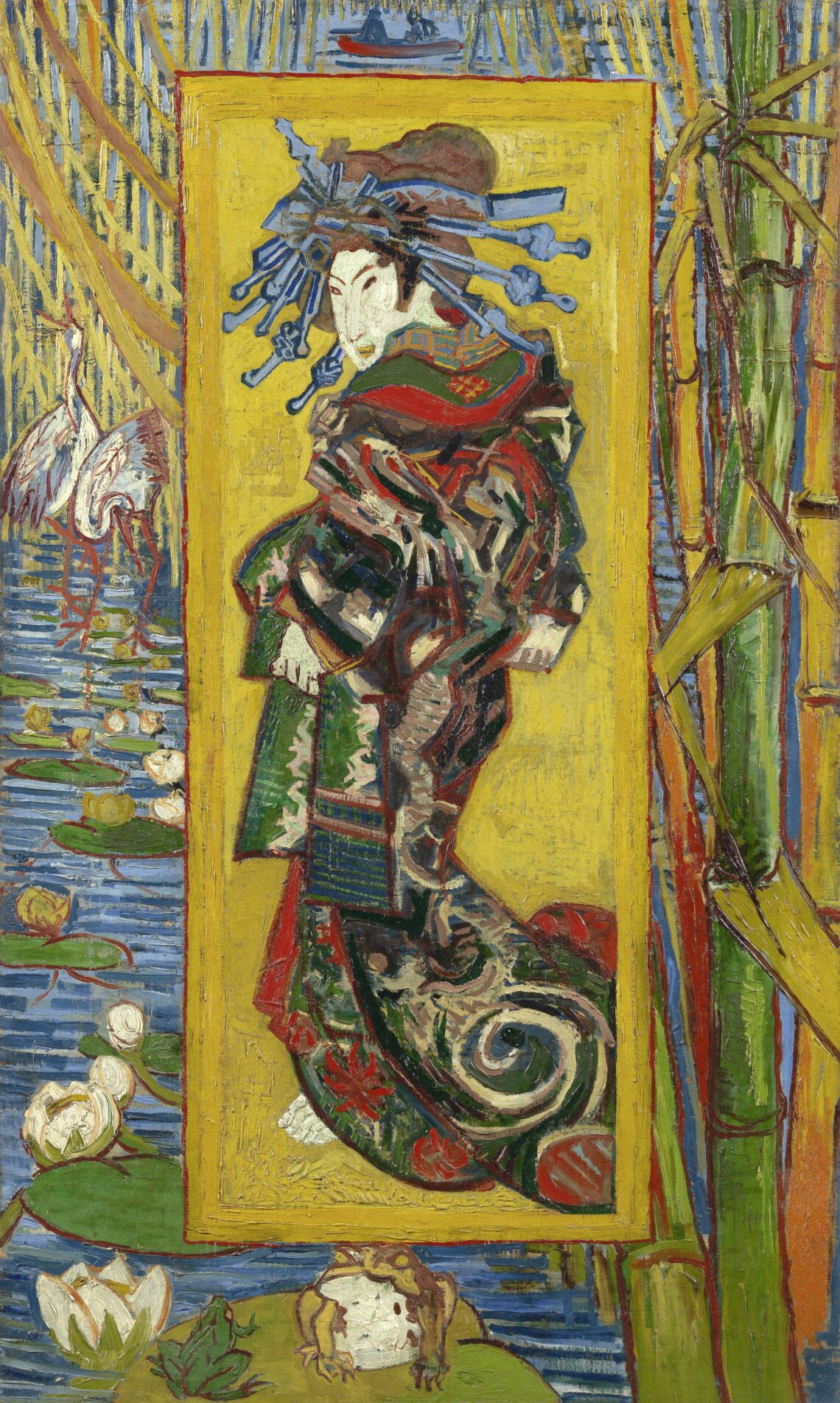
As an undergraduate, I had an idea for my senior independent study thesis that I couldn’t quite figure out how to realize. I wanted to create a digital collection of Japonist paintings from 19th century Europe. More specifically, I wanted to chart out just how quickly Japanese imagery (stylization, recreations, motifs, etc.) and goods (kimono, fans, ceramics, etc.) appeared in European paintings. I had lots of visual data – which is to say, I had knowledge of many works of art that would have fit into my project – and I had a pretty solid research question: just how many works of art fall into the category of Japonsime? The only issue is I had no idea how to even approach such a topic as the scope and methodology just felt too ambitious. Now that I am a masters student, I see how I could use data analysis and digital art history to make my project into reality. So, after six years of rumination, here is my proposal for how I could achieve my academic dream of realizing my project which I shall affectionately title Charting Japonisme.
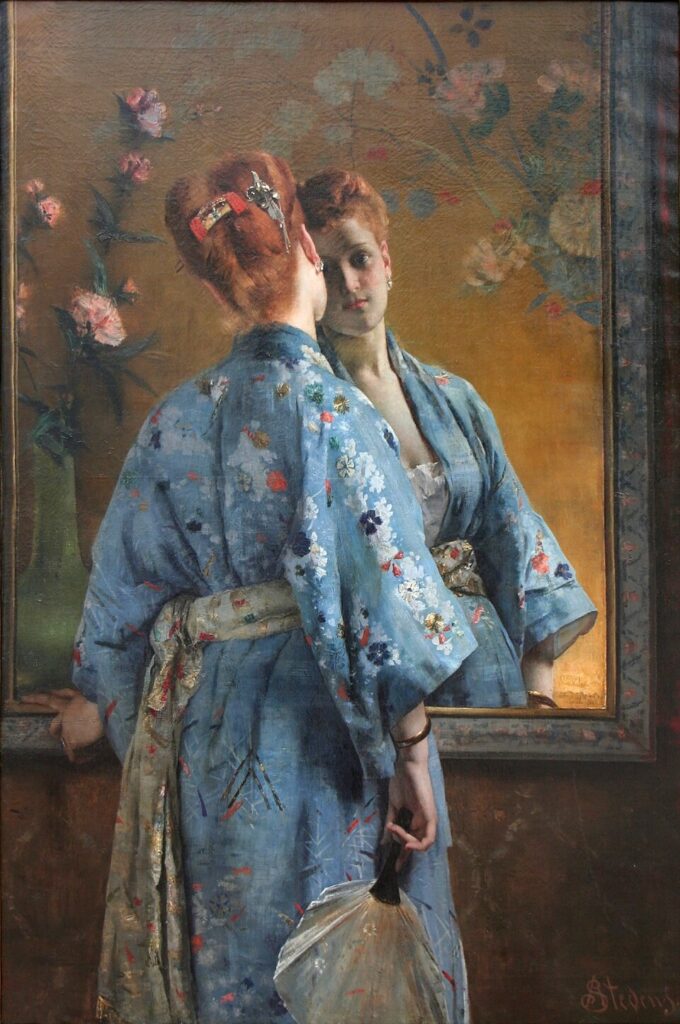
In June 2018, the Van Gogh Musuem in Amsterdam premiered an exhibition titled “Insights: Van Gogh & Japan.” The catalogue featured a large collection of works by Van Gogh that highlighted his adoption of Japanese aesthetics into his own visual style. The assertion of his inspiration is supported by Van Gogh’s letters and his Japanese print collection. His influence from Japanese art had yet to be explored to this depth before the exhibit. As far as my knowledge goes, this exhibit marked a distinct shift in interest in the field of Impressionist studies towards a Japonist interpretation. After 2018, Impressionist scholars took greater interest in considering how the entire movement was more globally minded than how the art historical canon had painted it to be.
and Japan, Treaty of Kanagawa,
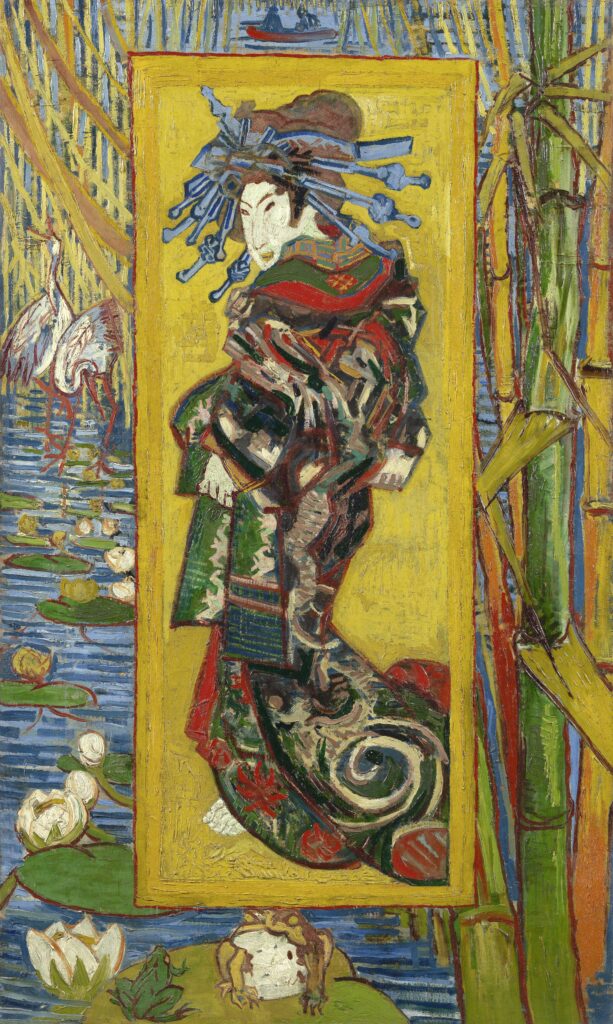
Japanese objects such as kimono, fans, and ceramics became popular as objects of consumption in Europe after the Treaty of Kanagawa. For my research, I want to analyze when Japonisme arose as an art movement and when (or if) it fell out of favor. I could also pin works onto a map and get a sense of where artists were adopting the visual styles of Japan more frequently. I could connect any of the data on a timeline onto a map and get a big picture view of how Japonisme changed across locations and time.

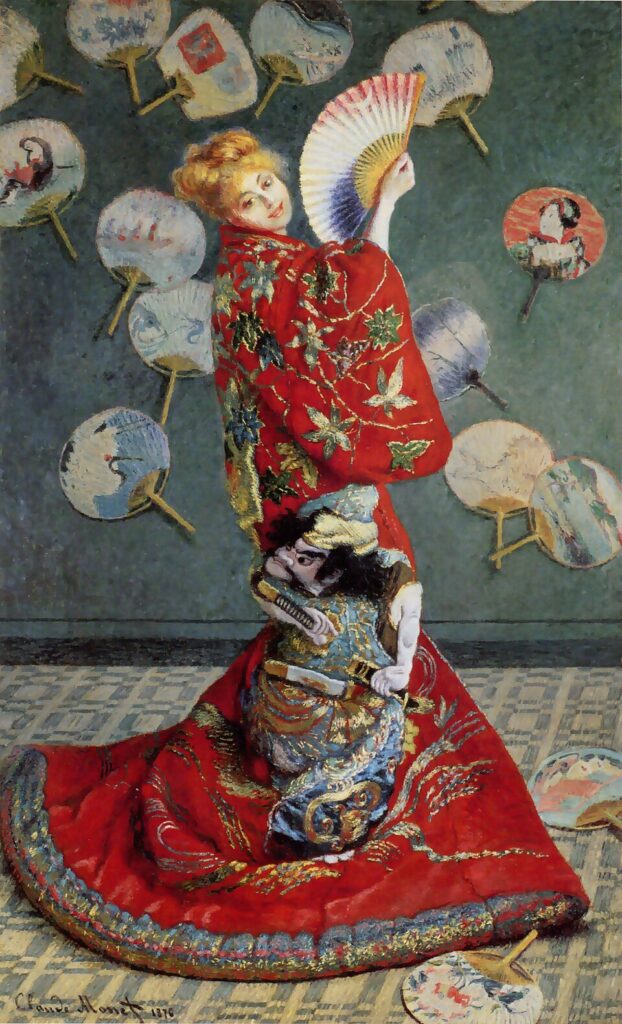
Scope of project to just paintings and just Europe (maybe even just France). One approach to keep this project feasible as a student would be to focus on a specific few artists. I am most notably interested in Vincent van Gogh and Claude Monet. I could use their catalogues raisonnés and chart exactly when they began incorporating Japanese objects and iconography into their paintings.
I miss doing this work!!!!!
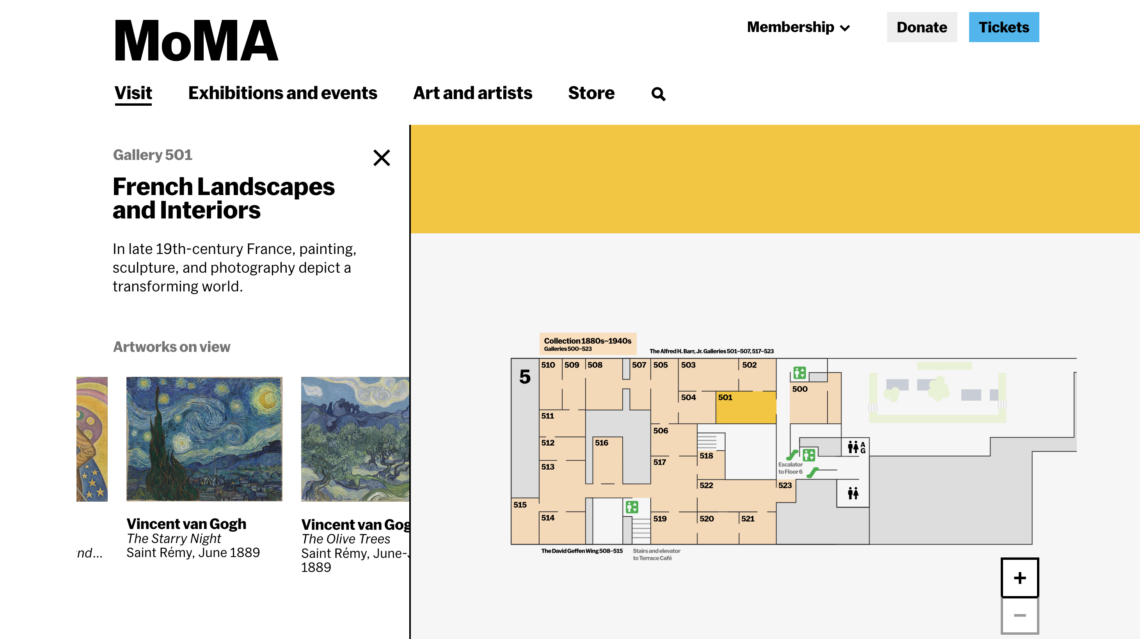
Google has been around since 1998, but I recently found out that Google Images has only been around since 2001. Even further, reverse image searching was only added as a function to Google Images in 2011. The internet seems so built around images, but search functionality is entirely built on text infrastructure. Finding relevant images with a Google search is a game of careful search engine optimization and it is a game that the user has to master. Finding relevant images from a search inquiry is a skill that we have come accustomed to, but are there other ways we can find images? Consider a museum as an analogy to consider alternative image search options. We may go to the MoMA looking to see Starry Night and Starry Night only. We can go to the help desk and inquire, “where is Starry Night?” and we would get an exact answer to find our image. This is akin to a traditional text-based image search inquiry. Consider instead someone who is interested in seeing late 19th century French landscapes and interiors. Upon inquiry, they will be delighted to know that someone at the MoMA has already curated an entire gallery of works that are relevant to their needs. Their inquiry is broader, so with a traditional image search inquiry might produce a wide variety of results ranging in relevance. Importantly, in a traditional search, the user has to vet these images for relevance. In the museum example, the curator of the museum has already done the vetting. The museum has eliminated the possibility of finding irrelevant works. Intentionally curated image collections change how we can find relevant images.
For this blog post, I will explore how search image results vary depending on which platform the inquiry is made. The search platforms I will use are Google, the built-in search function on the Museum of Modern Art website, and ChatGPT. I then will assess the results for their relevance to the inquiry, their ease of use, and any other noteworthy observations. For consistency of results, I will use the same search inquiry for all platforms: “late 19th century French landscapes and interiors.”
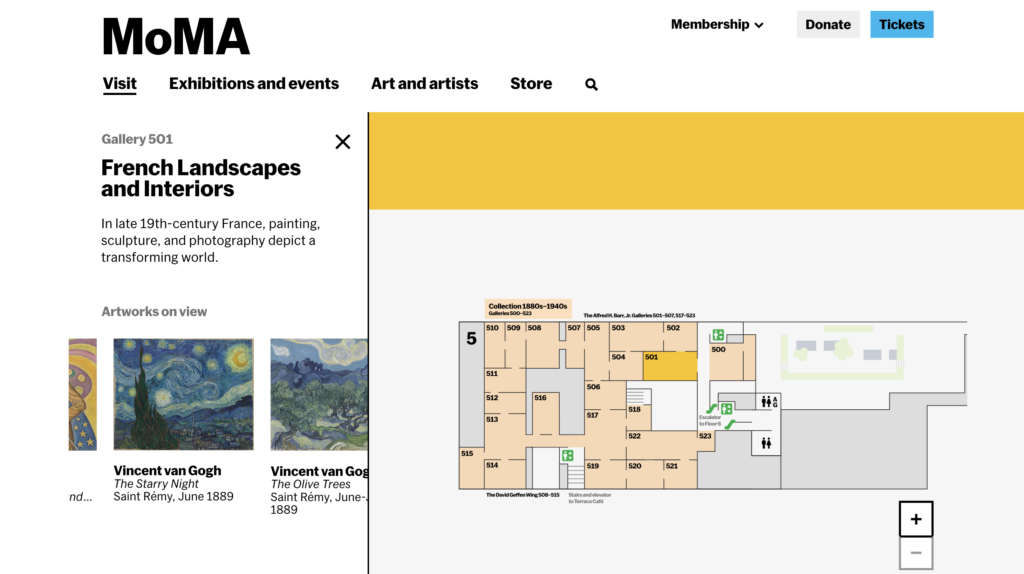
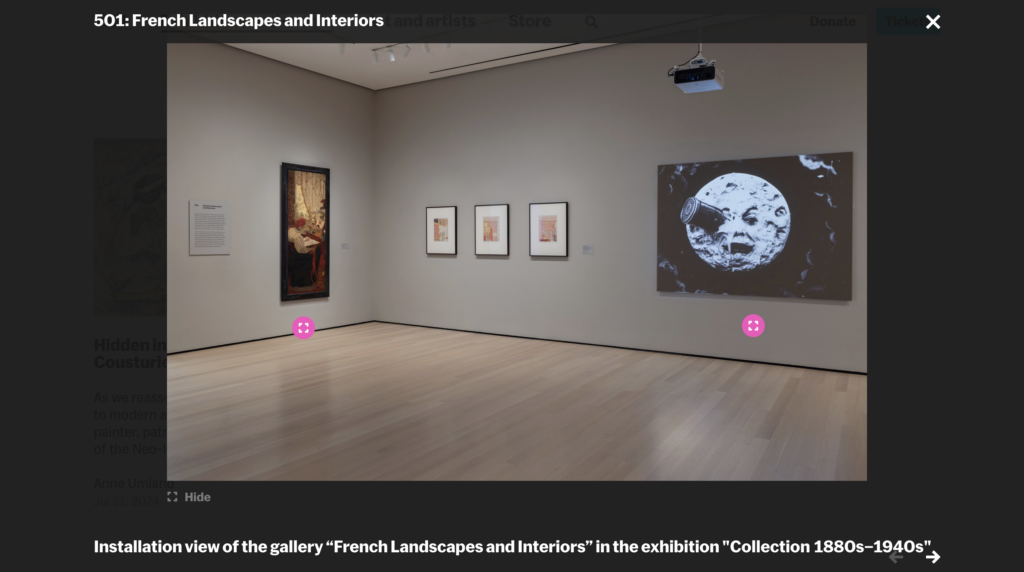
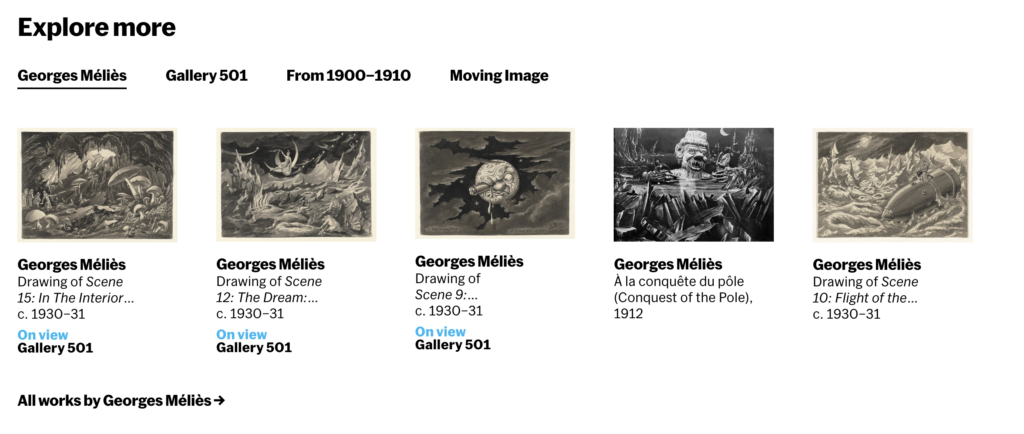
The Museum of Modern Art, like many museums with an online presence, have digitized the pieces from their on-display collection. Their website has its own search function located at the top of the website. The search function likely uses metadata from each object to power the search functionality. For example, a vase could be found searching for vase or for 1900. Searching for “late 19th century French landscapes and interiors” provides a link to the page for Gallery 501, their gallery space curated with French Landscapes and Interiors. The page produces images of items from their collection, text explaining the historical significance of the objects, and photographs of how the works are installed in the gallery itself. On this site, as much information as possible is provided to give users the full context of the object as though they were in the collection. To take it even further, when a user clicks on an object of interest, they are then recommended similar objects either by the same artist, in the same time period, or in the same gallery. As both a pro and a con, the museum website is a one stop shop. Users can find a lot of information about an object as well as many other objects that could be relevant as well, but of course, the major caveat is that everything on the MoMA website is something that is in the MoMA collection. Users don’t get the full scope of an artist’s work just from this one source. And in that case, they can turn to more generalized search engines that can pull from multiple museum pages with one search.
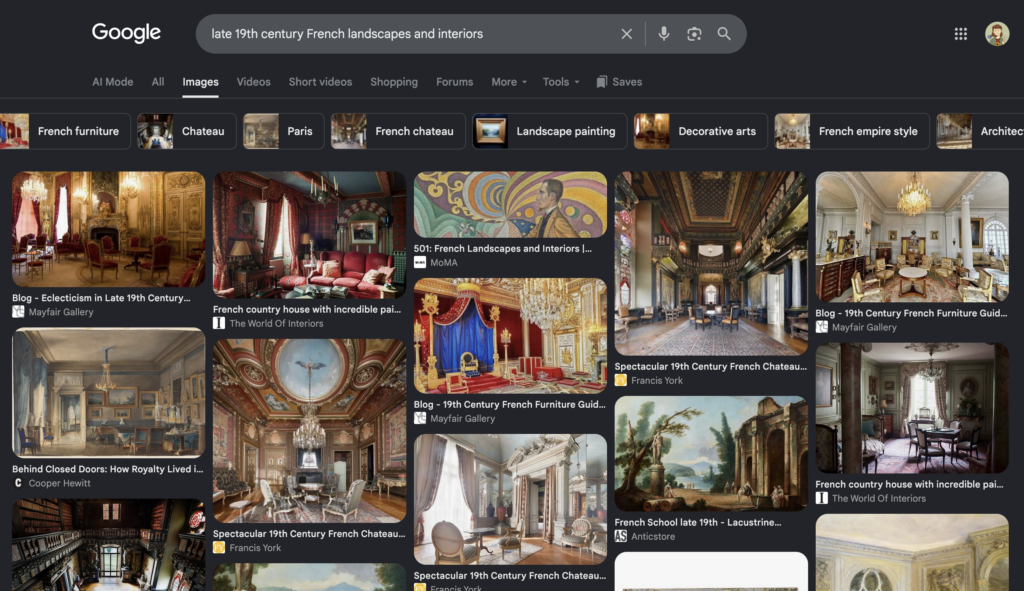
Many people begin their general search inquiries at a search engine. It’s a simple principle, if someone doesn’t know where to start, they start somewhere that will take their broad ideas and narrow them down. A user searching for late 19th century French landscapes and interiors may not know that they could search the MoMA and find relevant examples, but they can guess with pretty fair confidence that Google will be able to find images related to their search that will then point them to sources they can further vet. Here we can even see that the inquiry leads to an image from the MoMA gallery 501. Yet the results aren’t exactly like those that were on the page for the MoMA. We get an entirely different set of images now. These ones seem to be much more focused on the “interiors” part of the inquiry. Google Images pulled results from chateaus and houses with 19th century French decorative arts. And while this isn’t an irrelevant set of images, it is interesting that the landscapes part of the inquiry is almost entirely invisible aside from one example from “Anticstore.” Upon close inspection, notice that several of the images are from the same website. Three images are from “Mayfair Gallery,” two are from “The World of Interiors,” and three are from “Francis York.”
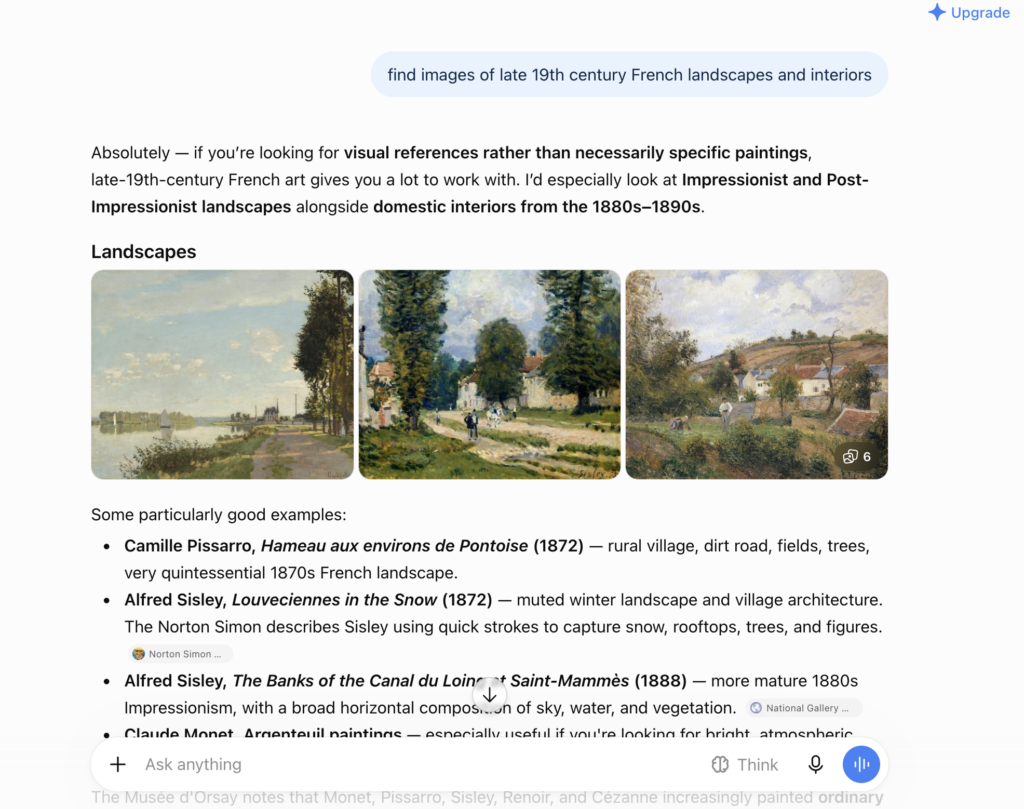
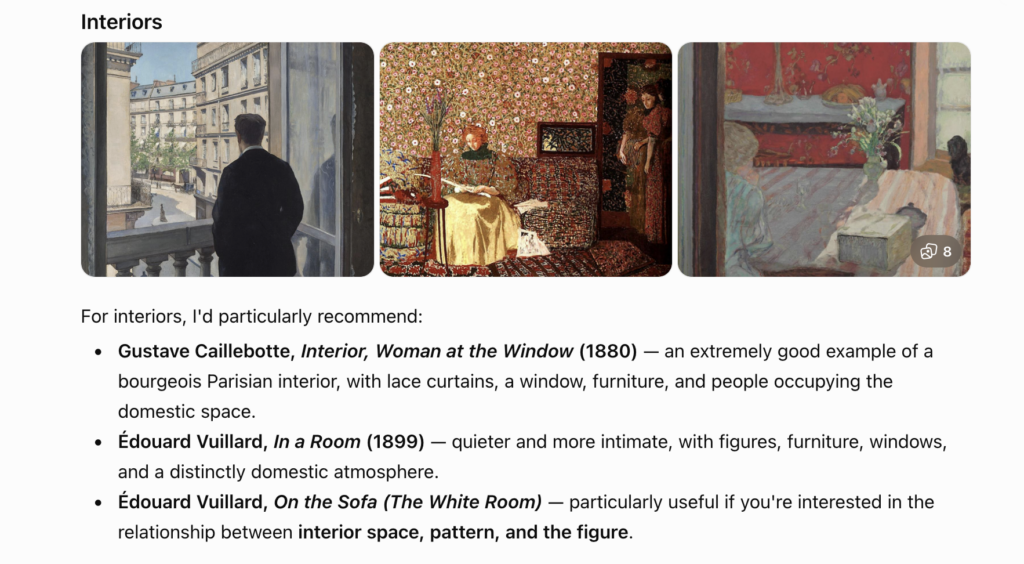
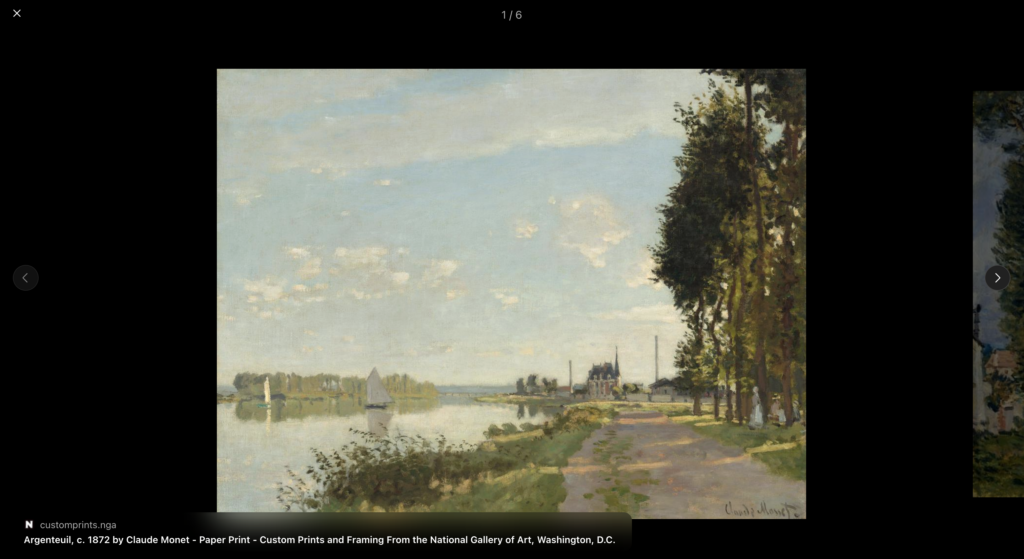
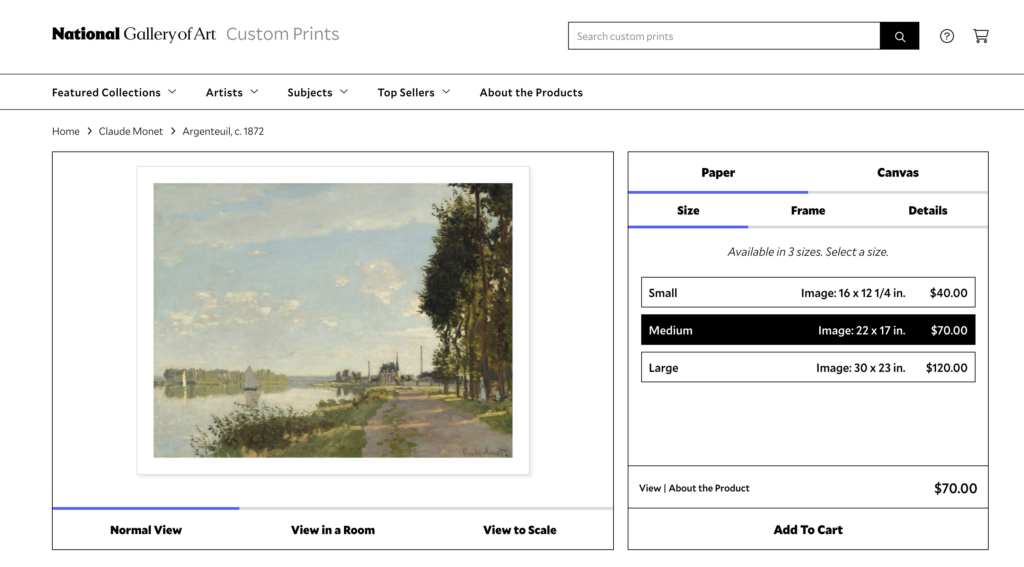
Lastly, ChatGPT doesn’t function the same way as other search websites. Just entering the inquiry “late 19th century French landscapes and interiors” isn’t enough. ChatGPT and other AI models need to be prompted, and the variables have to be defined more specifically. For this search, I had to specify “find images” as my goal. This immediately forces the user to have an idea of what they want their output to be, something that is great for weeding out irrelevant results and bad for browsing and stumbling upon unexpected but relevant results. ChatGPT gave results that aligned quite well with my prompt. It showed works from notable French impressionists, and it pulled results of landscapes and interiors separately but specifically. It gives some information about the time period, has images, gives information about the works specifically, and it says where the object is located – for some of the examples, the results even link specifically to the webpage to the museum. Amazing! Does this mean ChatGPT is the best option for image searching? Well, I still feel skeptical. I clicked on the Monet image Argenteuil. I noticed that the image linked out to the National Gallery of Art, but more specifically, it links to where you can buy prints of the image. This was consistent across all of the images in this collection (two of them link to Christie’s auction house where I could actually buy the painting itself!) produced by my prompt. Ah, so the greatest motivating factor here is that they are trying to sell me something.
In all, each search has its unique advantages and disadvantages to finding relevant images. Museum websites are reliable, but are limited to their own collection. Google is great for narrowing down a broad topic into a more specific scope, but it has redundant or irrelevant images as well. ChatGPT produces relevant results, but its results are influenced by ad revenue. It could be easy to dismiss any or all of these, but it takes skill to know when it is best to use which search tool. Ultimately, when using any website, consider, what is the goal of the institution that runs this website? A nonprofit museum won’t have the same motivations as a multi-billion-dollar company.
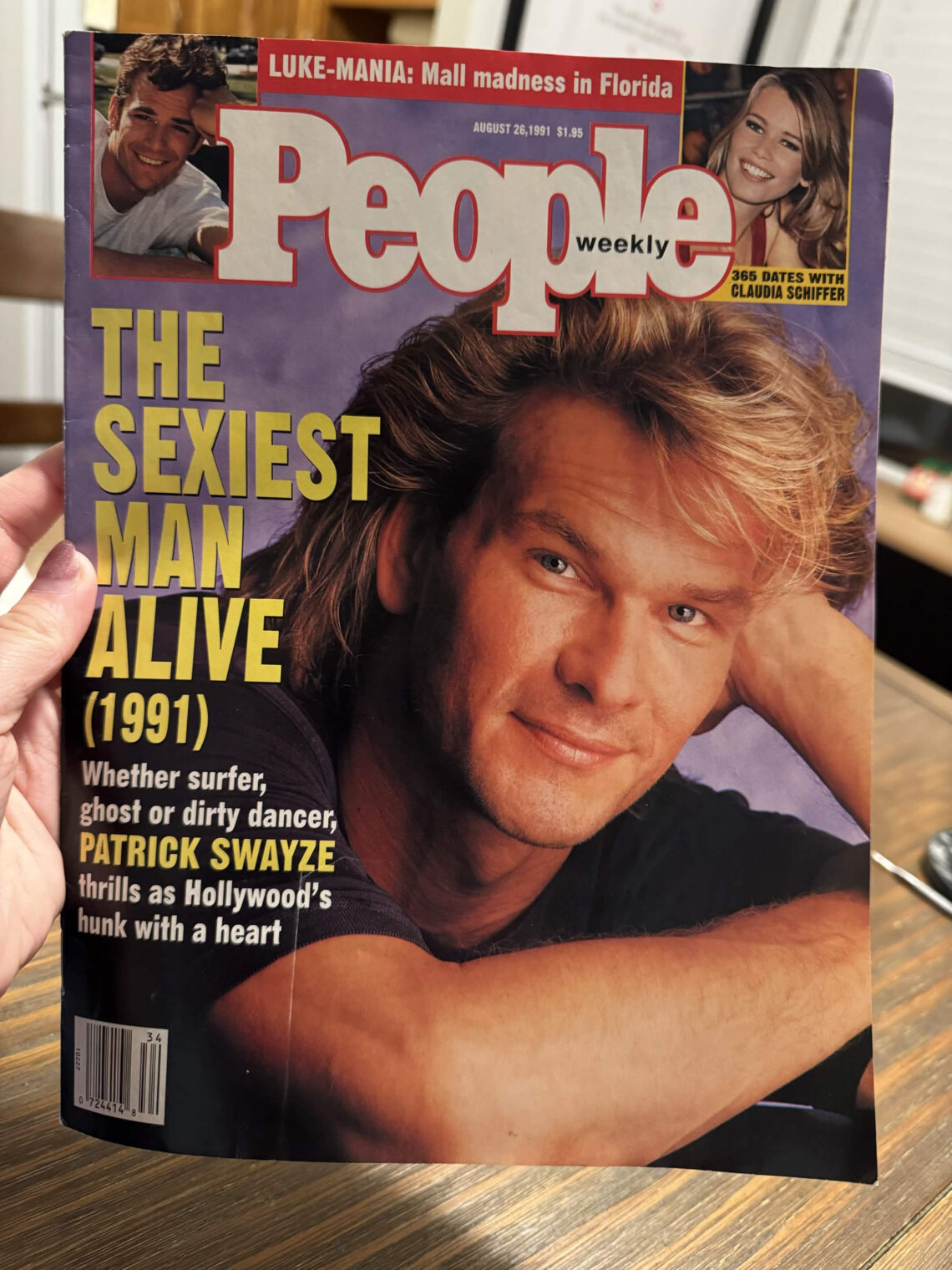

During my lifetime, magazines went from a waiting room stable, an airplane must-have, and a beloved piece of mail in my mailbox to nearly entirely obsolete. Culturally, not much is different. People are still interested in reading the news, tabloids or other specialized publications. What has changed is the habit of how they get this information. The format in which they read has evolved to the digital. Why would someone pay for a magazine when they could read the exact same article on the internet for free? Undeniably, users prefer convenience above all else when engaging with media. This trend exists outside of magazines. Video streaming replaced DVD, music streaming replaced CD, and even online shopping has replaced the need to shop in person. The user is given convenience of time, of access, of space, of cost, and of selection. “You can just do it online” has become a defining statement of our current era of user experience. Yet, are these experiences the same? The product may be the same – for magazines, this means getting the same information – but digital surrogates do not fully emulate the embodied experience of physical engagement. Furthermore, when something is unavailable digitally, suddenly the convenience evaporates. Emma Stanford evaluates the user experience with digital surrogates in her chapter “A Field Guide to Digital Surrogates.” Where digitization is a great way to enable multi-platform conveniences, it also necessitates altering the source material. Digital surrogacy is a fundamentally different user experience, and magazines are a model of these differences.
“The hallmark of a bad digital surrogate is that its badness cannot be gauged, because important contextual details are missing. Put another way, there are no bad digital surrogates—only misleading and poorly described ones.”
A Field Guide to Digital Surrogates p210. Emma Stanford.
Emma Stanford argues that digital surrogates are neither perfect substitutes nor are they threats to originals. To tie back to my own previous blog post, digital surrogates do not replace the experience of engaging with works in person. They are not inherently bad nor inherently good. Digitized works exist in their own category as approximations. Their value is in their ability to reproduce and disseminate works, but in turn, they freeze a work into one specific viewing model. This is where digital archivists have to be the most mindful. They want to be sure that they are using best practices and good equipment when digitizing works. Digital archivists have to use very specialized equipment and the work can be quite time consuming. This step is critical and is the invisible labor behind all digital surrogates. What is chosen for digitization depends heavily on the resources and interest of the archivists. That which is given the most attention is most likely to be digitized (and digitized well). There are all kinds of works that are not digitized, and to illustrate the difference between the physical and the digital, I want to make an example out of a personal collection of mine.
I am deeply interested in keeping up with celebrity news. One of my favorite sources for this information is the magazine People. Physical issues have been available since 1974, and now the magazine can be accessed through their website and on social media platforms. Articles and issues published after about 2008 are fairly easy to access through their in-site navigation. The website even offers some web-exclusive articles such as the People StyleWatch section. The online platform also allows for functionality that would otherwise be unavailable in the print format. To name a few, users can click links to products and go directly to its shopping page, they can leave comments on articles, and they can search through tags to read more on news that interests them. All of these conveniences have made it so the digital format has surpassed the physical in popularity. Yet, on the other side, the physical issue has noticeable differences.
Below are two photo scans from the cover article of People vol. 36, no. 7, Patrick Swayze’s Sexiest Man Alive issue from August 26 1991 (rotated for readability). These are digitizations I made using my personal physical copy of the issue.


And below is a screenshot of the digital surrogate of the same article.

The differences should be immediately apparent. In the printed article, the text is formatted around the photos, there are bold letters and block quotes, and the issue was printed in a rotated vertical format. The emphasis in the web version is on the content of the text, and even still, it does not include all of the text. This web digital surrogate – to use Stanford’s reasoning – is bad. It lacks a great deal of contextual information that the print version had. Yet, this is the only version available online as there are – in my search – no photo scans of the issue online. Complicatedly, I was only able to find the digital article on the Wayback Machine – itself a digital surrogate of the internet and not an exact approximation of viewing the article at the time it was published online. It seems the article has been archived from the site and is inaccessible using the site’s navigation bar. Stanford points out that even when works are made digitally accessible, they may not stay accessible forever thereby making the digitization efforts disappear.
So, with all these problems, what is the point of digitization of older magazines at all?
“…while digital surrogates may not be perfect, they are better than nothing, and the need for them is urgent.”
A Field Guide to Digital Surrogates p208. Emma Stanford.
In my perspective, reading this specific issue in person was the only complete option. Even my digitization is itself a digital surrogate, and I used it in this post to serve as a stand in for the actual object. By rotating the pages, I modified the images in a way that alters your viewing experience. The magazine is also more than just the one article. I found the other articles, the vintage advertisements, and the tactile experiences all shaped how I engaged with this piece of media. I love collecting physical media, but of course this is not always an option for everyone. And while the demand for this issue might not be high, I think it would be a good idea for me to photo scan the rest of the pages and upload them. Now, if only I could figure out if that is legal under copyright… that is a thought for another day.
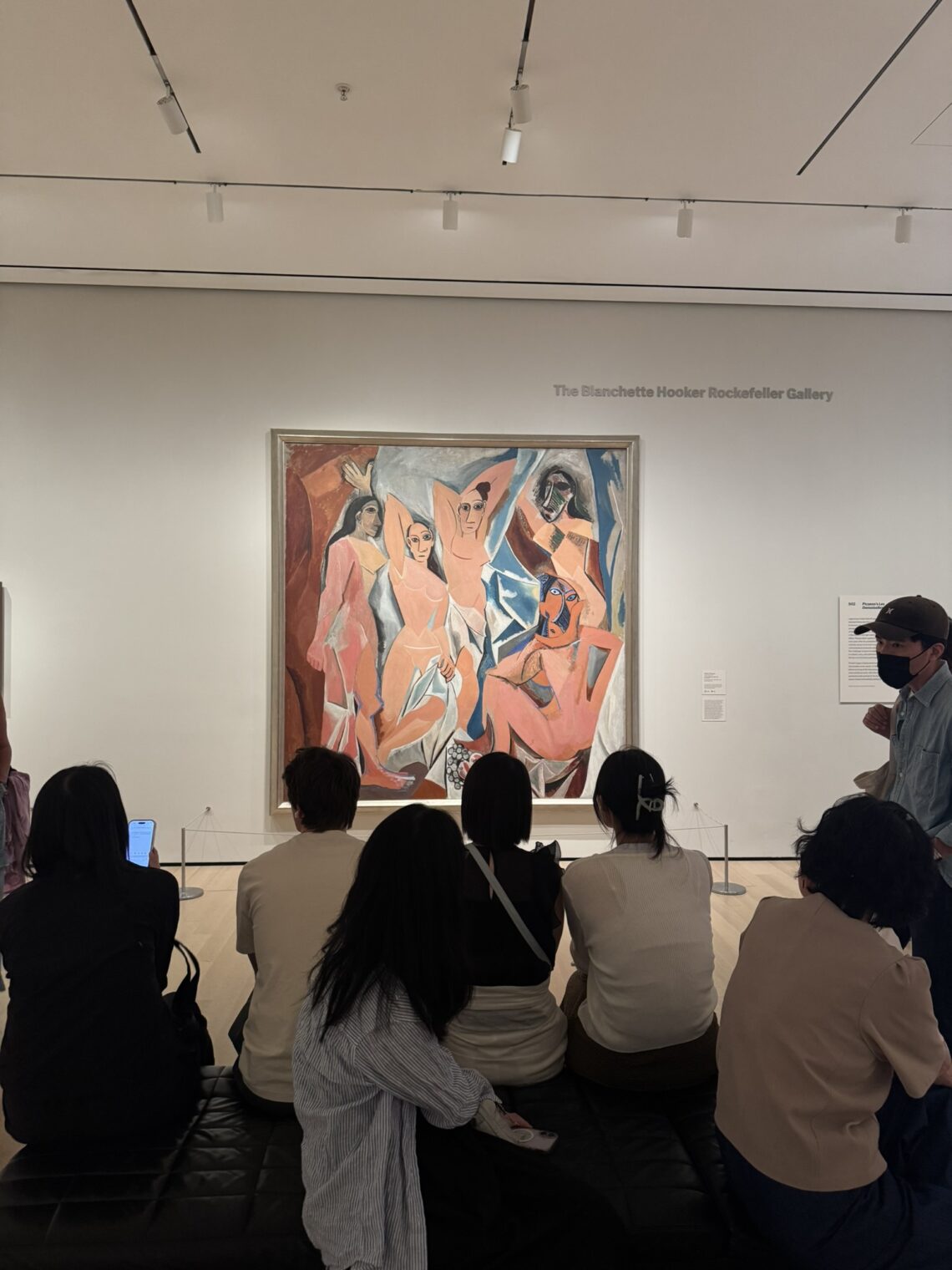

I recently took a trip to the Museum of Modern Art in New York City, a museum that is six floors of some of the best-known artworks in the canon of Western Modern art. Virtually every gallery had a work of art that I had either studied extensively or a work by an artist I have studied extensively. One of the highlights of the collection is Pablo Picasso’s Les Demoiselles d’Avignon, a large-scale painting that revolutionized depictions of the human form through a distinct and developing Modern subject. The painting has established a reputation as emblematic of several converging art movements that emerged from the early 20th century that solidified Les Demoiselles as one of Picasso’s most analyzed works of art. It is an essential work of art to study in university level art history courses; I personally have studied the work in multiple classes. So, when I finally saw Les Demoiselles in person for the first time, I found that I had very little left to engage with.
In The Digital Transformation of Art History, a chapter from the 2020 book Companion to Digital Humanities and Art History – Harald Klinke explores the notion of “distant viewing” (p.34). Alois Riegl coined the term in 1897/8 – originally Fernsicht – to distinguish how our modes of viewing are altered based on our physical proximity to a work of art. When up close to a painting, we can study and understand that the work is made of brushstrokes and, in turn, when far away from a painting, we can employ methodological study the broader work of art. This framework was developed assuming the viewer would be physically in front of a work of art, so, the question is, how do digital renderings of art change our modes of viewing?
The field of art history began in grand tours and flaneur style connoisseurship. Art pilgrimages remain the peak to any art historical research today (otherwise, why would we set departmental travel funds aside for students wanting to see researched works in person?). Yet, for me with Les Demoiselles, I felt that the MoMA had done sufficient work in producing digital renderings of the painting that I as a viewer and student had enough visual information to study the work of art through digital-born distant viewing. I can admit, I am not a Picasso scholar, but I am a Modernist, and in that moment, I felt surprised that I extracted very little from my close viewing experience with Les Demoiselles. So, does this mean that museums are obsolete? Do we even need to go see works of art in person at all if their digital stand-in counterparts do the job? I’d even ask one question further: hypothetically, could you become an art history expert without ever setting foot into a physical museum?
Klinke counters these questions by posing specific difficulties of relying on digital-only modes of viewing. As he sees it, our current systems of digital viewing do not serve as complete enough of platforms to support research questions (p.36). The data associated with works of art could be irrelevant, insufficient, and invalid. Their visualizations only tell part of the story behind the work and lack distinct interactivity. Why would a researcher have to travel to the MoMA to see Les Demoiselles d’Avignon when they could just go online and look up an image of it themselves? Digital art history aims to do what conventional art history cannot – it allows equal access. Yet, as a consequence of doing so, Klinke observes that art historical research is largely conducted alone. Klinke argues that digital art history should not replace conventional methods of art history and should serve as an extension of traditional approaches that enhances and deepens understanding.
Where spaces like museums, libraries, and classrooms may feel obsolete now that you can just look up the same information online, digital spaces do not allow the same level of collaborative communication. Distant viewing when done alone without contextual information is just looking. Collaboration through learning visual and digital literacy skills is the key to true art historical understanding. My viewing experience of seeing Les Demoiselles at the museum was not deeply stimulating, but this is because I have already done so much collaborative visual learning on the painting in the classroom. While I am still unsure if someone could become an expert in art history without ever setting foot into an art museum, I do feel strongly that someone cannot become an expert in art history by themselves. In creating this blog, here is my own kind of attempt at engaging in digital art history through a more social internet. I put my thoughts into the world with hopes that it creates collaborative and productive art historical discussion.
Welcome to WordPress. This is your first post. Edit or delete it, then start writing!