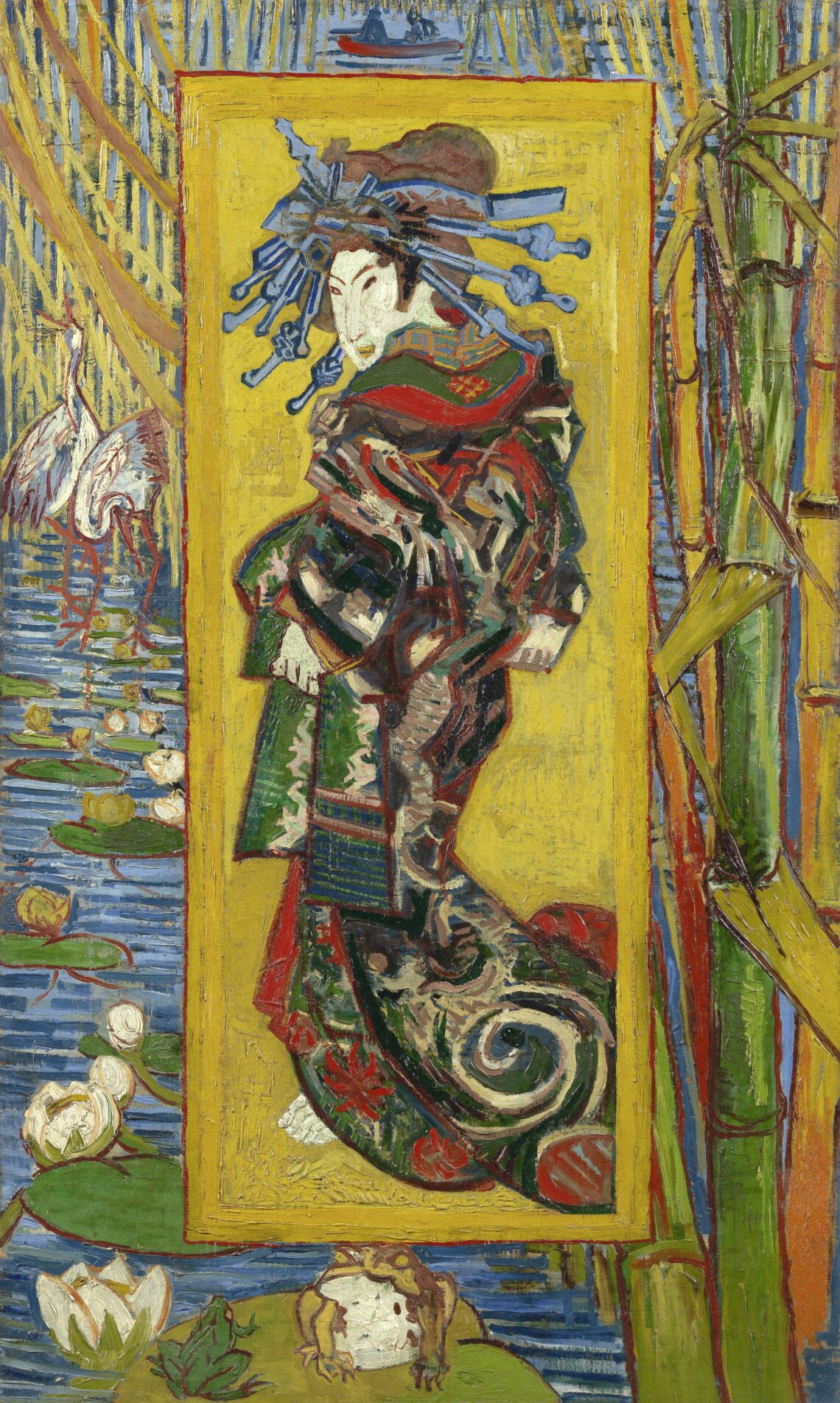
As an undergraduate, I had an idea for my senior independent study thesis that I couldn’t quite figure out how to realize. I wanted to create a digital collection of Japonist paintings from 19th century Europe. More specifically, I wanted to chart out just how quickly Japanese imagery (stylization, recreations, motifs, etc.) and goods (kimono, fans, ceramics, etc.) appeared in European paintings. I had lots of visual data – which is to say, I had knowledge of many works of art that would have fit into my project – and I had a pretty solid research question: just how many works of art fall into the category of Japonsime? The only issue is I had no idea how to even approach such a topic as the scope and methodology just felt too ambitious. Now that I am a masters student, I see how I could use data analysis and digital art history to make my project into reality. So, after six years of rumination, here is my proposal for how I could achieve my academic dream of realizing my project which I shall affectionately title Charting Japonisme.
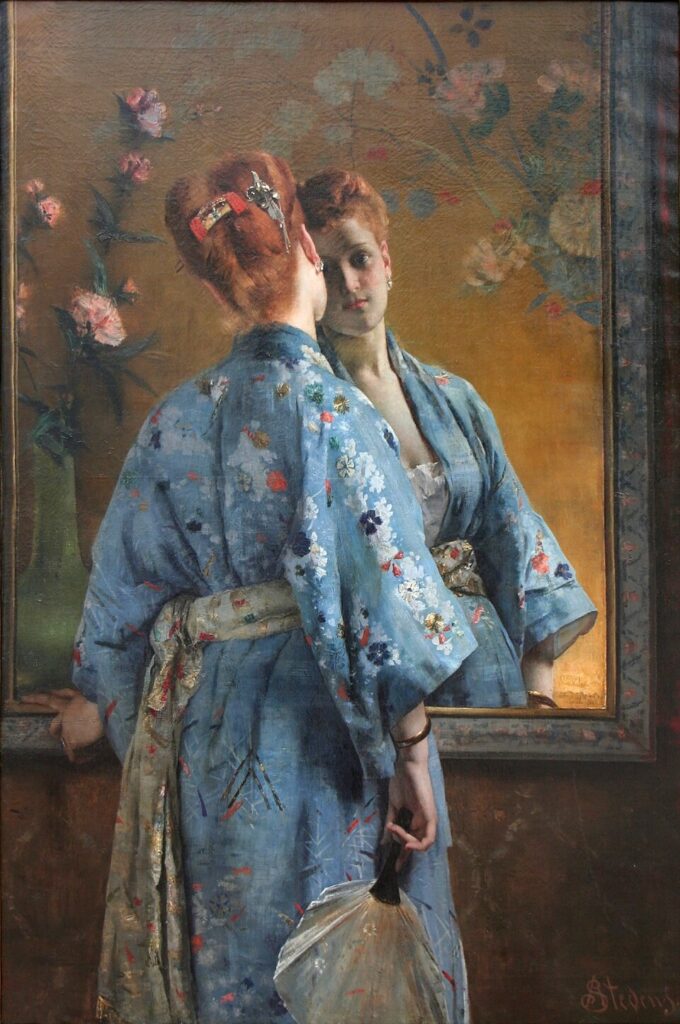
Literature Review
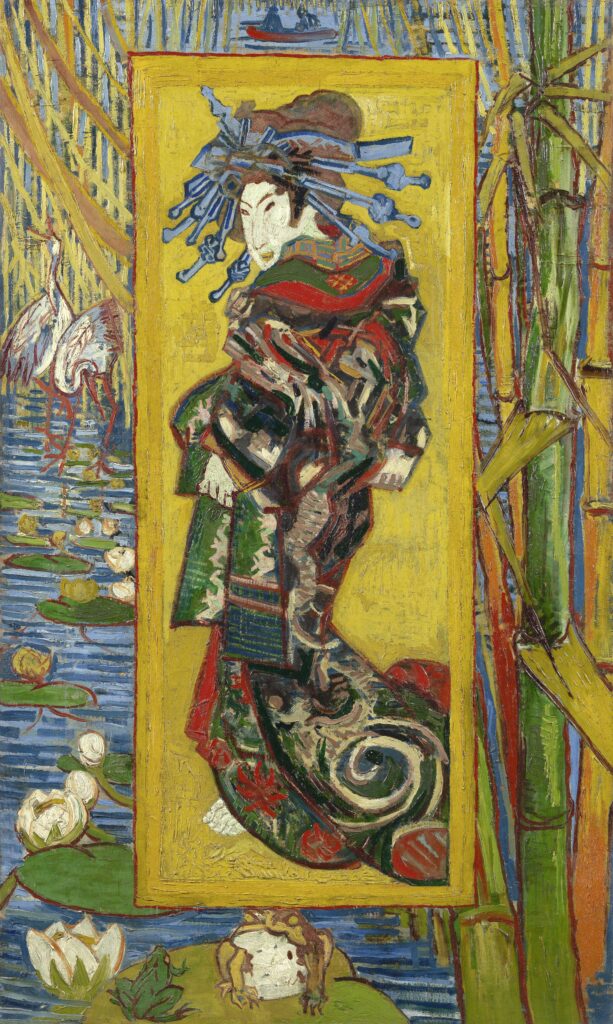
In June 2018, the Van Gogh Musuem in Amsterdam premiered an exhibition titled “Insights: Van Gogh & Japan.” The catalogue featured a large collection of works by Van Gogh that highlighted his adoption of Japanese aesthetics into his own visual style. The assertion of his inspiration is supported by Van Gogh’s letters and his Japanese print collection. His influence from Japanese art had yet to be explored to this depth before the exhibit. As far as my knowledge goes, this exhibit marked a distinct shift in interest in the field of Impressionist studies towards a Japonist interpretation. After 2018, Impressionist scholars took greater interest in considering how the entire movement was more globally minded than how the art historical canon had painted it to be.
and Japan, Treaty of Kanagawa,
Research Questions
Japanese objects such as kimono, fans, and ceramics became popular as objects of consumption in Europe after the Treaty of Kanagawa. For my research, I want to analyze when Japonisme arose as an art movement and when (or if) it fell out of favor. I could also pin works onto a map and get a sense of where artists were adopting the visual styles of Japan more frequently. I could connect any of the data on a timeline onto a map and get a big picture view of how Japonisme changed across locations and time.

Methodology
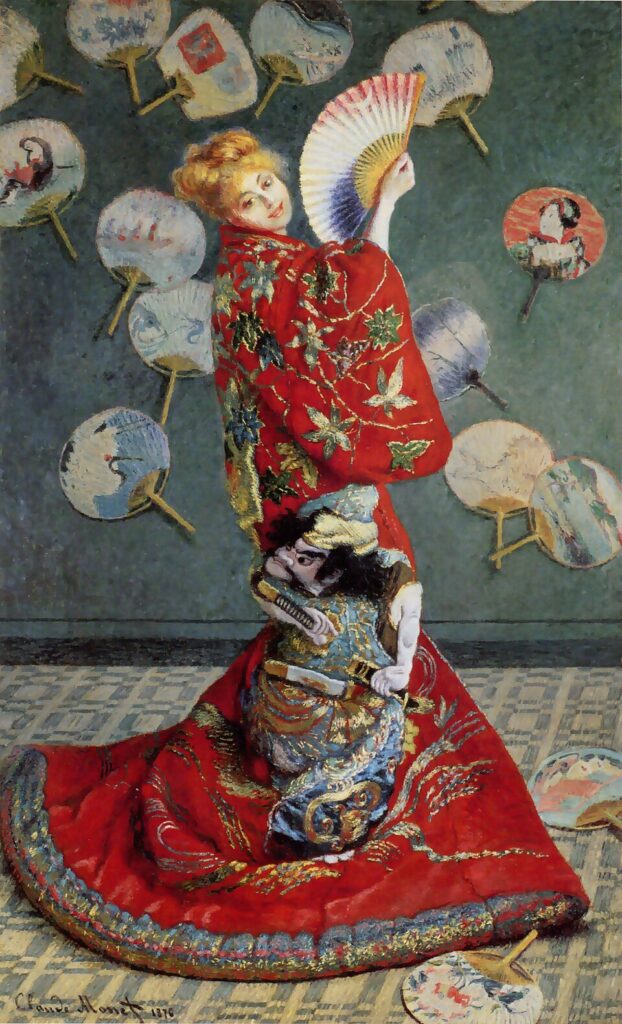
Scope of project to just paintings and just Europe (maybe even just France). One approach to keep this project feasible as a student would be to focus on a specific few artists. I am most notably interested in Vincent van Gogh and Claude Monet. I could use their catalogues raisonnés and chart exactly when they began incorporating Japanese objects and iconography into their paintings.
Future of this project?
I miss doing this work!!!!!



I love the idea for this project. I think it piggybacks on a lot of existing projects looking at iconography in European works, which isn’t a bad thing. It means there’s a model, a need, and a desire for this. And I don’t just say that because I am a little bit of a Japanophile and really enjoy Japanese material culture specifically, so the globalization of that is also really interesting to me. But I could say that about a lot of different topics, so that isn’t the only reason I think you’ve hit on a really good idea.
One, you’re excited about it, and I think that’s always the engine that’s necessary. Two, like I said, it’s similar enough to other projects without replicating them that there are really strong models out there for how to do it. And three, I think there’s great potential to then piggyback off of it. I would love to see someone take whatever method you use, reverse it, and look at the introduction of Western motifs into Japanese art around the same time period or after. I think there’s a lot of potential for collaborative work and cross-pollination. Whenever you get ready to organize data and need to make some structuring, vocabulary, or ontology decisions, call me up, and I will offer my limited but enthusiastic expertise.
I really think you’ve synthesized what makes a good project and have a very clear idea of how to proceed, but also of how to integrate it back into existing scholarship in a way that is more palatable to a lot of the old guard in art history and to a lot of people who work in the arts generally. With everything we have to do on computers now, they’re feeling a little digital-projected out and just want to see books, which I think is a very valid way to feel. I often feel that way as somebody who tries to balance my love of both. But I think tying it back into that scholarship is really effective. I also think it makes it a very appealing project for funding, because you’ve shown that there’s work that’s already been done, but that there are ways that work could then be extended into a usable tool for further scholarship, or into your own way of presenting whatever you find.
Congratulations on finding a really, really cool idea, and I absolutely hope you go forward with it at some point.
gxz1tl